


Last Updated: November 1, 2026
Quick Summary
Baby clothes work best as a small capsule wardrobe of neutral, mix-and-match pieces that layer across seasons, rather than a bulging drawer of unworn garments. Most parents need around 10 to 15 everyday garments in the current size, with a few extras for washing and accidents. Buy less, choose carefully, and check each size chart by weight and height rather than age.
- Read size charts by weight first, then height, and treat age labels as the least reliable guide.
- Buy one size ahead for sleepwear but the current size for everyday separates.
- A newborn checklist needs 4 to 6 sleepsuits or bodysuits and 3 to 4 everyday outfits.
- Size up when toes feel tight, crotch poppers pull or cuffs leave red lines.
- Choose high cotton content with smooth inner surfaces for babies with sensitive skin.
Table of Contents
- Why Fewer, Better Baby Clothes Work Harder
- Baby Clothes Sizes by Age: What Actually Fits
- Your Newborn Baby Clothes Checklist
- How Many Baby Clothes Do I Need?
- Building a Baby Capsule Wardrobe
- Fabric, Skin and Washing: Making Pieces Last
- Frequently Asked Questions
Why Fewer, Better Baby Clothes Work Harder
Baby clothes shopping rewards a strange instinct: buy everything. The result is a drawer full of garments worn twice and a pile of outgrown sleepsuits.
Babies grow quickly, so anything you buy gets limited wear. Fewer pieces means each one earns its place, and better construction means each one survives being passed down. Buy less, choose carefully, and let the wardrobe work harder than the trend cycle.
Baby Clothes Sizes by Age: What Actually Fits
Baby clothes sizes by age are a guide, not a rule. Most ranges label garments by age in months, often from newborn to 18 months, but fit varies by brand and by the baby. Weight and length tell you more than the label does, so check the size chart on each range before you buy and size up when a baby sits between two sizes.
How to Read a Size Chart Properly
A size chart usually gives three numbers: a weight range in kilograms, a height range in centimetres, and an age range in months. Use them in that order of priority. Weight is the most reliable indicator for babies under six months; height becomes more useful once a baby is pulling to stand. Age is the least reliable, because two babies of the same age can differ by two or three sizes.
Measure at home rather than guessing. Lay a baby on a tape measure or use string and a ruler: measure head to heel for full-body length, and around the widest part of the chest for tops. Compare those numbers with the chart, not the age on the label.
Allowing for Growth Without Buying Too Big
A common pattern is to buy one size ahead for sleepwear and the current size for everyday separates. Everyday outfits that are too big slip off shoulders and trip a crawling baby, so buy those in the size that fits now.
Check the grow-on features before you buy. Many sleepsuits have folded cuffs that turn over to cover the hands, and some have adjustable poppers or extra rows of fastenings at the crotch that extend the fit by a size. A plain sleepsuit in the right size will be outgrown before one with turn-back cuffs and an extendable body.
The First Size to Buy
For fit questions, our FAQs cover what parents ask us most.
When to Size Up
The signals are practical rather than numerical. Size up when the toes of a sleepsuit feel tight against the end of the foot, when the crotch poppers pull or leave marks, when cuffs leave red lines on the wrists, or when a baby can no longer stretch both arms above the head without the shoulders pulling down. If two or three appear at once, move up a size.
Your Newborn Baby Clothes Checklist
A newborn baby clothes checklist should cover the basics and nothing more: a handful of sleepsuits or bodysuits, a few everyday outfits, soft layers for cooler days, and sleepwear for nights. Newborns need frequent changes, but they do not need variety, and a lean checklist means fewer unworn garments and less washing.
Our simple starter list:
- 4 to 6 sleepsuits or bodysuits for day and night
- 3 to 4 everyday outfits that mix and match
- 2 soft layers or knits for cooler days
- Sleepwear and a cosy robe for winding down
- Pram shoes and a few accessories rather than a full shoe collection
For the sleep and bath side of the checklist, browse our sleep and bath essentials to round out pyjamas and robes for bedtime and slow mornings.
How Many Baby Clothes Do I Need?
Most parents need far fewer pieces than they buy. A working number is around 10 to 15 everyday garments in the current size, with a few extras for washing and accidents. If you are washing twice a week, you need less than you think; if you are washing daily, add a couple of sleepsuits rather than a whole new range.
remy knitted three-piece set - cream →
The honest test: count what your baby wore in the last week. That is your real wardrobe. Everything else is either a spare or a mistake.
Building a Baby Capsule Wardrobe
A baby capsule wardrobe is a small set of neutral, mix-and-match pieces that all work together, so every combination is an outfit. Build it around a few base colours, choose relaxed fits for everyday movement, and pick garments that layer across seasons, so one set of baby clothes covers playtime, days out and cooler weather.
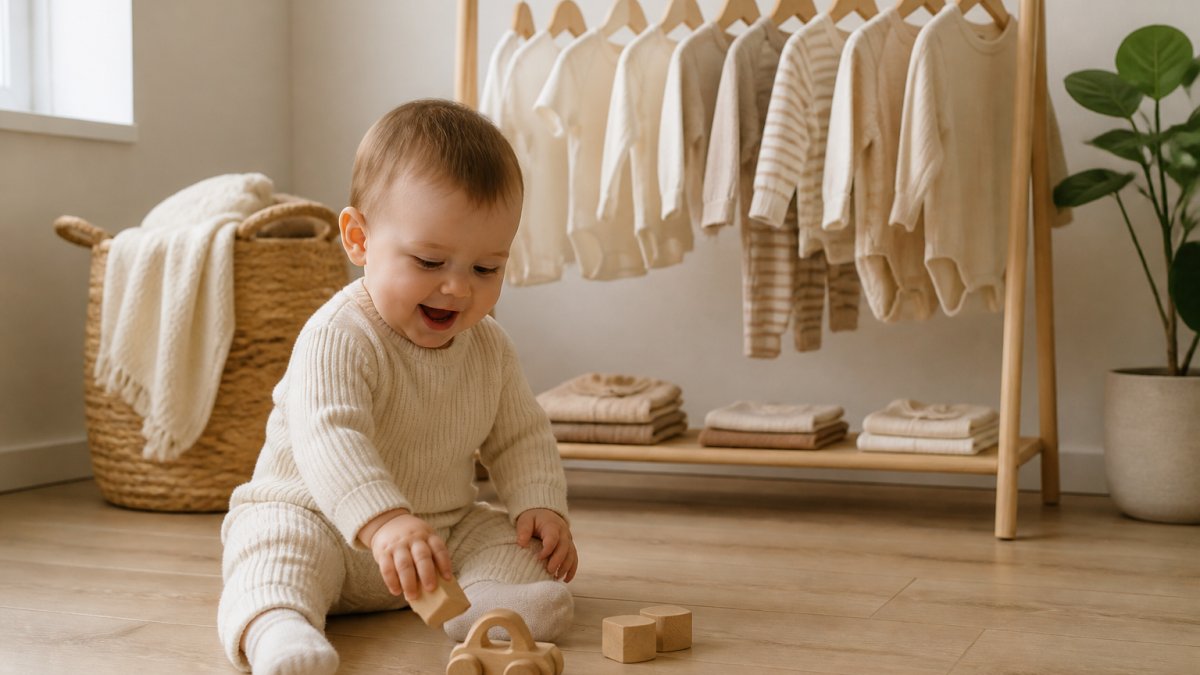
Start with our knitwear and sets for soft layers, then add everyday basics that mix and match. A few pieces from our own range show how it works: the Remy knitted three-piece set in cream at £34.00, the Rowan knitted all-in-one in beige at £30.00, the River cotton dungarees in brown at £26.00 and the Marlow cotton sweat set in cream at £28.00.


What It Costs
A capsule built this way is a modest outlay, not a splurge. Because the pieces mix and layer, a small set covers most of the week. Check our delivery and returns page before you order so you know how delivery works and what to do if a fit is not right.
| Piece | Price | Role in the capsule |
|---|---|---|
| Remy knitted three-piece set | £34.00 | Cosy layer and complete look |
| Rowan knitted all-in-one | £30.00 | One-piece everyday outfit |
| River cotton dungarees | £26.00 | Durable everyday staple |
| Marlow cotton sweat set | £28.00 | Relaxed play-day outfit |
Fabric, Skin and Washing: Making Pieces Last
Fabric choice matters for sensitive skin. Cotton is a common choice for everyday baby clothes because it feels soft, and knitted cotton brings texture without stiffness. Check garment labels and any safety information before use.
Choosing Fabric for Sensitive Skin
Look for a high cotton content and a smooth inner surface. Cotton jersey and interlock knits are soft against the skin. Wool and cashmere blends are warm but can feel prickly, so choose them for outer layers rather than next-to-skin pieces.
Check the care label before the first wash, not after. A label recommending a cool wash and no tumble drying tells you the fabric is likely to shrink or pill if treated roughly; one that allows a warm wash and tumble drying is usually a more robust everyday cotton.
Fastenings and Safe Sleepwear
Fastenings are a safety and practicality issue, not a detail. Poppers along the inside leg and crotch make night-time changes quicker and reduce handling. Zips should have a fabric guard at the top so the pull cannot touch the chin or neck. Avoid long ribbons, ties and loose buttons on anything a baby wears unsupervised, and check that any decorative button is firmly attached before the first wear.
Washing, Stain Removal and Care
Washing is where cheap garments fall apart and good ones prove themselves. Wash at a cool temperature and follow the care label. Treat stains early rather than scrubbing hard, and follow the care label every time, over-washing at high heat is the fastest way to shrink and pill a knit.
Wash new pieces before first wear and wash sleepwear more often than daywear.
Frequently Asked Questions
What clothes does a newborn baby need?
A practical newborn baby clothes checklist covers sleepsuits, bodysuits, a couple of cardigans or knits, socks, a hat and a pramsuit for cold days. Keep the first-size wardrobe lean, with a few sleepsuits, bodysuits and layers. Choose pieces with wide neck openings and poppers for easy changes, and avoid anything with loose ribbons or scratchy labels. Little Row's Rowan knitted all-in-one (£30) works as a complete outfit for slow mornings.
How many baby clothes do I need in total?
Most parents need far fewer pieces than they buy, so a lean set in each size is usually enough. Buying fewer, better baby clothes means each piece gets worn regularly before it is outgrown, which is where value sits.
What fabrics are best for sensitive skin?
Cotton, especially knitted cotton, is a safe default because it breathes and washes well. Wash new baby clothes before the first wear, use a non-biological detergent and skip fabric conditioner, which coats fibres and can irritate skin. Little Row's knitted cotton sets are a soft everyday option.
How do I build a baby capsule wardrobe that lasts?
Start with a neutral base of five or six colours so everything mixes: cream, beige, brown, grey and one accent. Choose separates that layer, such as the River cotton dungarees (£26) over a bodysuit, and knits like the Remy three-piece set (£34) that work alone or under a coat. Buy two sizes ahead only where you know growth patterns, and pass pieces down rather than replacing them. A small capsule keeps the drawer manageable and outfit choices quick.
Building a wardrobe that lasts takes a little restraint and a few good decisions. At Little Row, we make understated staple pieces designed to mix, match and be passed down: relaxed fits for everyday wear, considered neutral colours, and quality construction that holds up to washing and play. Choose fewer pieces, choose them well, and let them work harder. Get started with Little Row and build a baby wardrobe you will actually use.
